
Reviewed · AUCKLAND WHALE AND DOLPHIN TOURS
Auckland: Whale and Dolphin Watching Half-Day Eco Cruise
Auckland’s harbor is the starting point for a proper wildlife search: aboard the 65-foot Dolphin Explorer, you leave the city behind and head into Hauraki Gulf Marine Park, where dolphins, orcas and whales may turn up in open water. Seabirds are part of the show, too, and the catamaran’s research work gives the trip more substance than a simple sightseeing cruise.
I like two things in particular: the route begins right in central Auckland, so you can fit a marine safari into a short stay, and the crew brings science into the experience, explaining wildlife and carrying out research. A dollar from each ticket also goes to the Hauraki Gulf Guardians fund.
The main caveat is the one no operator can fix: wild animals do not keep a schedule. You may see dolphins but no whales, or have no marine mammal sightings at all. If that happens, a second cruise is included, but you still need time in your itinerary to use it.
At a glance: Auckland Whale and Dolphin Watching
- A 65-foot catamaran leaves from central Auckland: Board the Dolphin Explorer at Berth 9, Eastern Viaduct Marina, opposite the Maritime Museum.
- The cruise lasts 4.5 hours: Allow half a day for the journey, including the city harbor, island views and time searching the gulf.
- Wildlife is the point, but sightings vary: Dolphins, whales, orcas and seabirds are possible. Recent trips have also seen penguins and sharks.
- Marine science is part of the trip: Crew members share wildlife information and may carry out research, including plankton sampling.
- A no-mammal-sighting return cruise is included: You can take the cruise again if no marine mammals appear.
- The fare is $130 per person: Snacks and drinks cost extra, and $1 from each ticket supports the Hauraki Gulf Guardians fund.
Leaving Auckland by catamaran
The cruise starts at Berth 9 in Eastern Viaduct Marina, on Auckland’s waterfront. The boat sits opposite the Maritime Museum, at the western end of Quay Street. Check in with the crew at the top of the boarding ramp 30 minutes before departure. Check-in closes 15 minutes before the trip, so do not cut it fine.
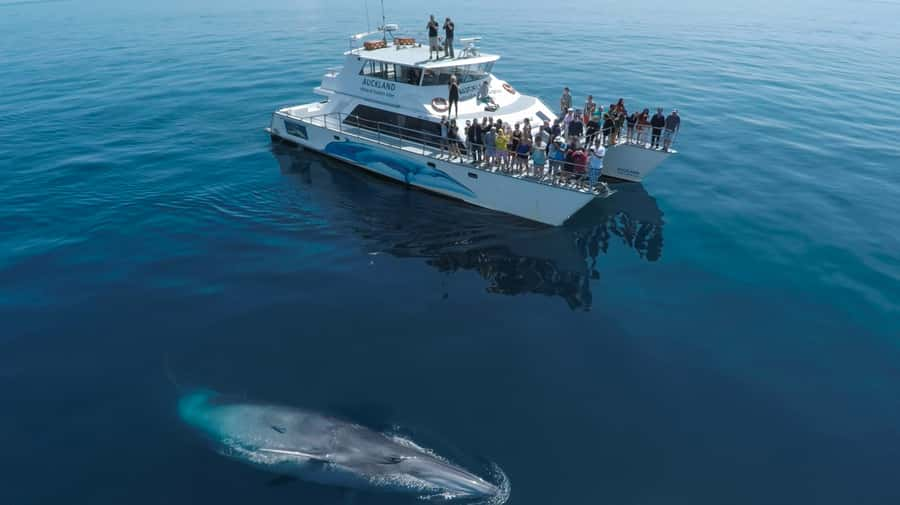
The Dolphin Explorer is a 65-foot catamaran, described as a luxury vessel. It gives you a comfortable base for several hours on the water, with seating options and room to watch for wildlife. The boat is not wheelchair accessible: stairs and narrow doorways are the issue. If mobility is a concern, check whether the setup will work for you before booking.
Once aboard, you get a brief change of scene before the wildlife search begins. Auckland’s harbor, waterfront and working port look different from the water, and the early part of the trip passes familiar landmarks such as North Head and Devonport. This is a useful bonus, not the main event. The central Auckland departure means you spend less time arranging transport and more time out on the gulf.
More whale and dolphin trips around Auckland:
- Auckland Dolphin and Whale Watching Eco-Safari Cruise
★ 4.5 · 1,790 reviews - Auckland: Tikapa Moana Whales, Dolphins and Islands Cruise
★ 3.9 · 292 reviews - Auckland: Tikapa Moana Dolphin, Whale and Island Cruise
★ 4.0 · 17 reviews
North Head, Devonport and Rangitoto Island
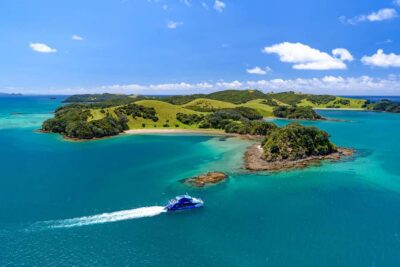
The route gives you views of North Head and Devonport, then Rangitoto Island, the volcanic landmark that rises from the gulf. These sights help set the scene: you are moving from a busy city harbor into a large marine park, with islands and open water replacing the city edge.
I would treat this stretch as a gentle introduction rather than a dedicated sightseeing tour. The skipper’s commentary covers the area and its wildlife, while the crew keeps watch for signs of marine life. On a clear day, the island and harbor views add plenty to the trip. If cloud or rain rolls in, the scenery may be less striking, but the crew’s explanations and wildlife search continue.
As the boat moves farther into Hauraki Gulf Marine Park, the focus shifts from landmarks to the water itself. The skipper and crew look for marine mammals and seabirds, and the route can change according to what is spotted. That flexibility is part of the appeal: the boat is not simply following a fixed loop past scenic points.
Wildlife watching, without a guarantee
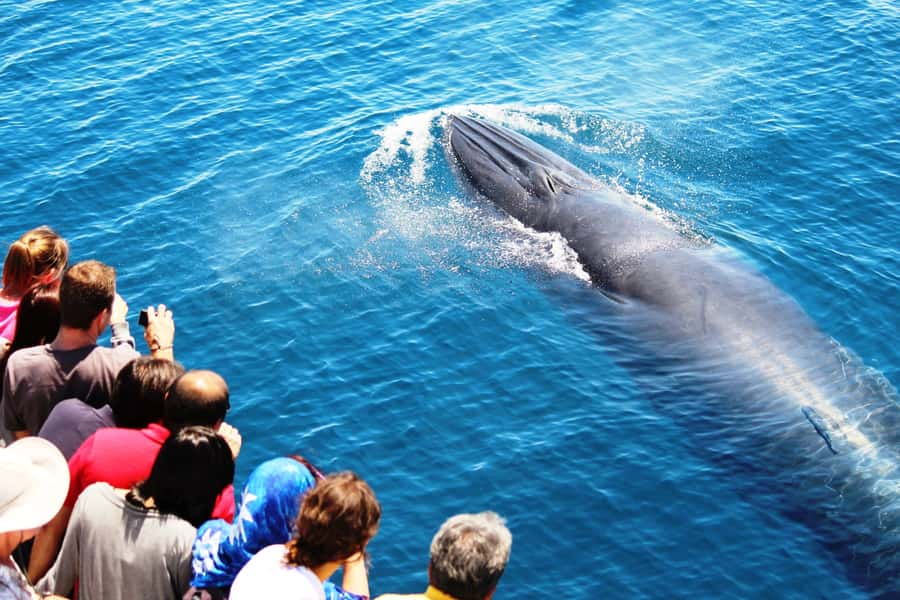
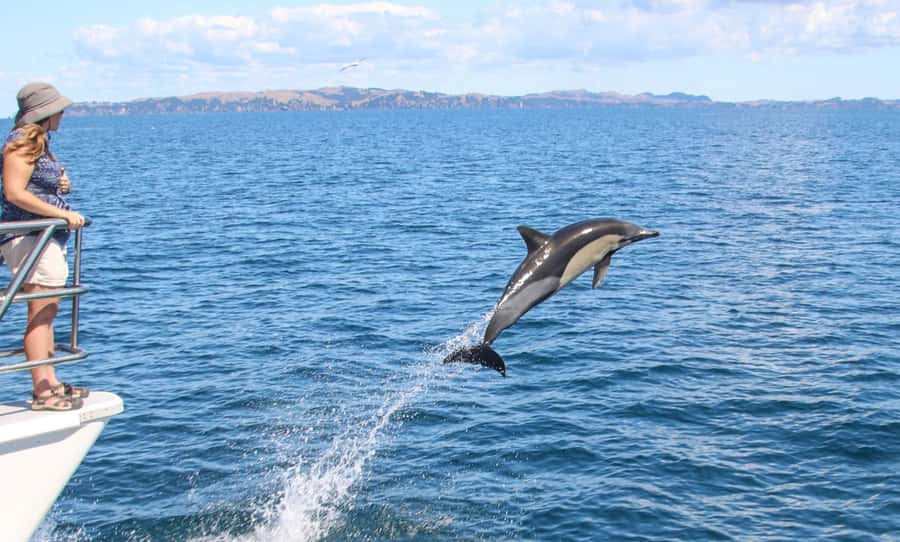
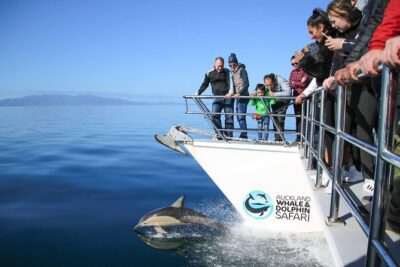
The headline animals are dolphins and whales, with orcas and bottlenose dolphins among the species that regularly visit waters close to Auckland. Common dolphins have also been seen in pods, sometimes close to the boat. Whale sightings can include Bryde’s whales, though whales may be farther away and harder to spot than dolphins.
Other wildlife can make the day. Gannets, shearwaters and blue penguins have appeared on trips, and some cruises have also seen sharks. These are possible sightings, not a promised checklist. The range of animals is one reason to pay attention between the larger encounters. The crew may point out birds or smaller signs of marine life while you wait for a whale or dolphin.
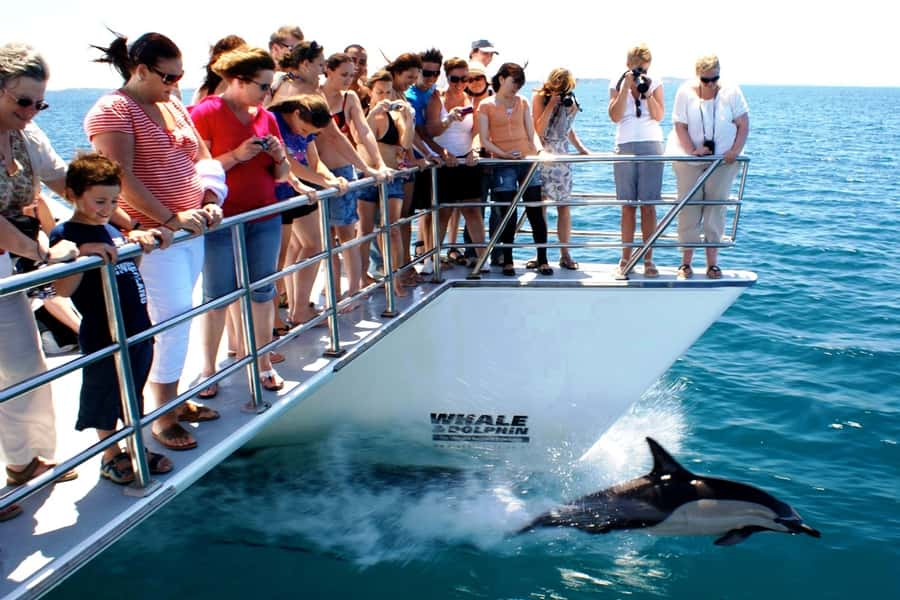
When dolphins approach, the crew can give you time to watch them. The vessel is able to get closer than whale-watching operations in some other locations, but the stated aim is to view wildlife while respecting it. The crew’s attention to distance and animal behavior matters: the best encounter is one that does not put the animals under unnecessary pressure.
You may see a whale at a distance rather than close to the boat. That can still be a rewarding sight, but it is worth setting expectations before you go. Some trips bring several species and long periods with dolphins; others produce fewer sightings or none at all. The included return cruise softens that risk, though it cannot make nature predictable.
Marine scientists, not just a microphone
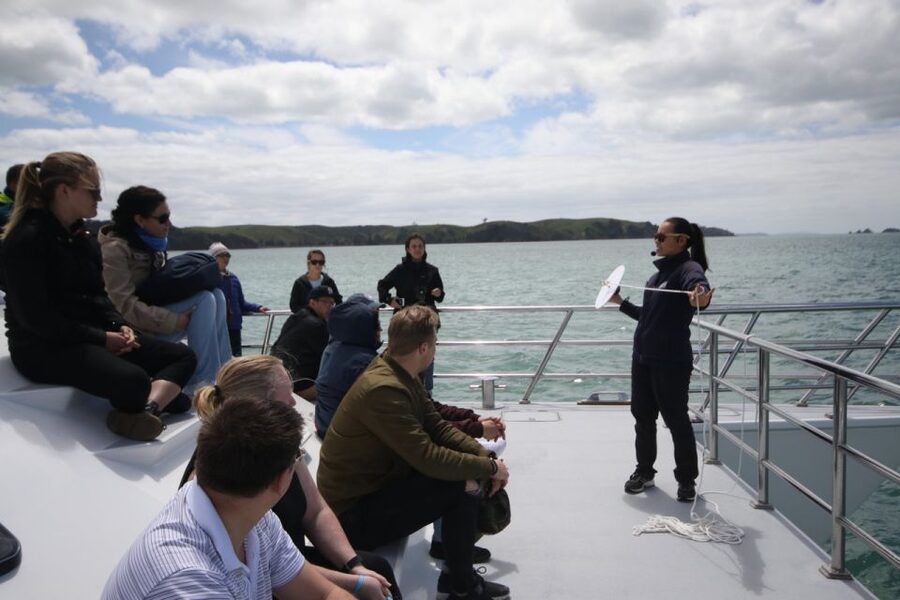
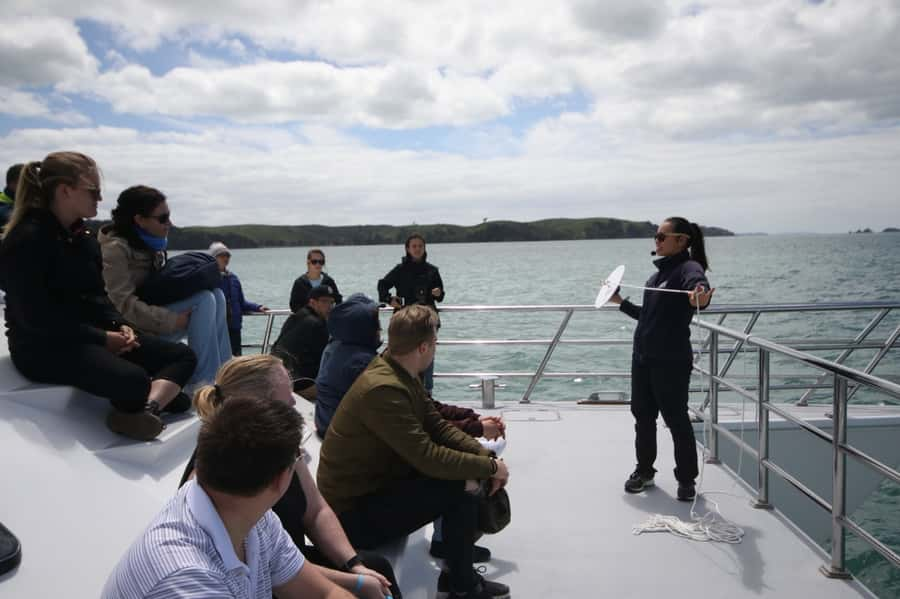
The commentary is a major part of the experience. The crew explains what you are seeing, shares information about the gulf and its wildlife, and answers questions. Marine research is also woven into the trip. Passengers have seen crew members take plankton samples and learned how researchers track animals by watching feeding activity at the surface.
That science gives quiet stretches a purpose. You are not just waiting for a fin to break the water; you can learn how marine mammals use the gulf and how researchers gather information about the ecosystem. It also makes the conservation contribution tangible. One dollar from every ticket goes to the Hauraki Gulf Guardians fund, which supports efforts to protect and restore the gulf.
The crew’s warmth and energy come through as a recurring strength of the experience. Names associated with past trips include Toni, Sanaa, Emily and John, alongside other crew members and marine biologists. The team changes, but expect a working crew that handles both the boat and the wildlife commentary. If you are curious, ask questions. The science is not an add-on hidden behind a formal lecture; it is part of what happens on the water.
A few more Auckland tours around Auckland worth a look
- Half-day Discover Auckland City Sightseeing Tour
★ 5.0 · 1,080 reviews - Auckland Scenic Half-Day City Sightseeing Tour
★ 4.8 · 532 reviews - Half-Day: Small Group Auckland Scenic Tour – 4 HOURS
★ 5.0 · 152 reviews - Auckland Shore Excursion: Half-Day Guided City Tour
★ 5.0 · 148 reviews
What four and a half hours feels like
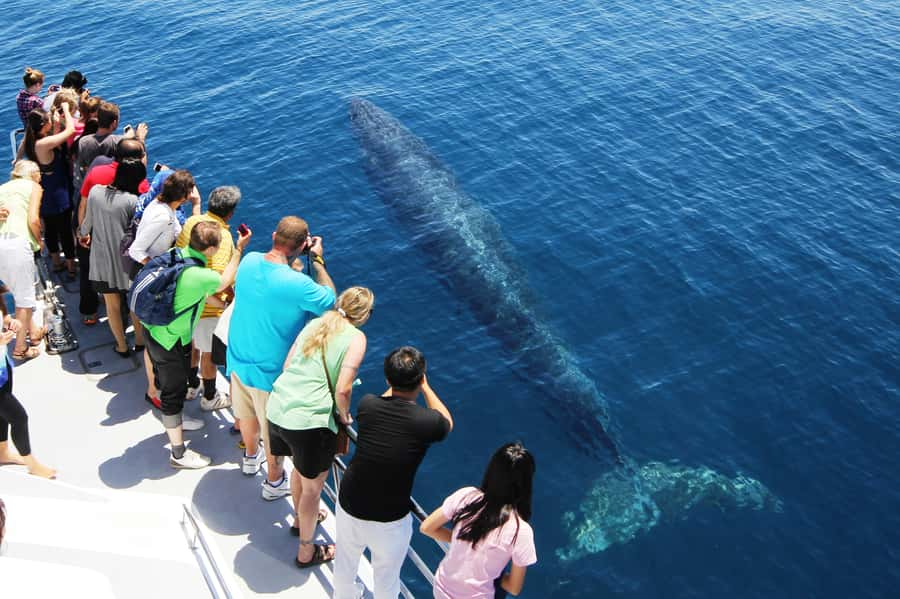
At 270 minutes, this is a substantial half-day outing, not a quick harbor lap. The extra time gives the boat room to travel into the marine park and search for animals rather than turning around after one brief pass. It also means you should plan for a long stretch at sea, with changing wind and conditions.
A small range of snacks, hot food and drinks is available to buy onboard, including beer and wine. Food and drinks are not included in the ticket price, so bring what you need or budget for a purchase. The trip is more comfortable if you arrive prepared: wear warm clothes, bring a showerproof jacket, and pack a sun hat and sunscreen. Auckland weather can shift, and wind feels colder on the water than it does on the dock.
Bring a camera and binoculars if you have them. Binoculars can be especially useful if a whale appears farther off. Pack any personal medication you need, and take sea-sickness medication before boarding if you are prone to motion sickness. The advice is practical, not fussy: a queasy passenger has a harder time enjoying even a very good sighting.
The trip is not suitable for heavily pregnant women. Children under five may come only when closely supervised by a parent or guardian, and unaccompanied minors are not allowed. If you are bringing a young child, consider the full duration and the fact that wildlife may require patience.
The real value at $130
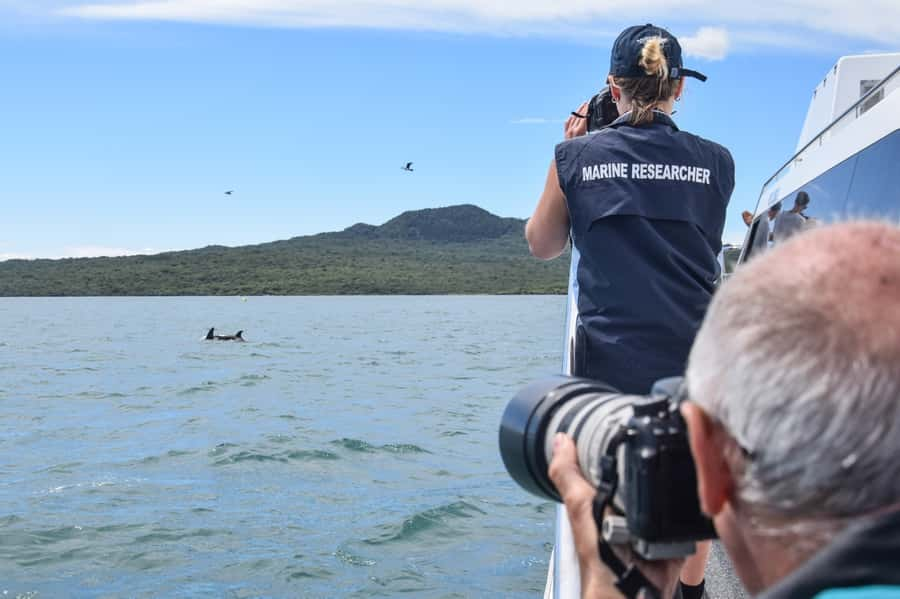
At $130 per person, this is not a budget boat ride. Its value depends on what you want from the outing. You are paying for 4.5 hours at sea on a large catamaran, a guide and skipper, wildlife searching, science commentary, and a second cruise if no marine mammals are seen. The conservation contribution is another worthwhile part of the fare.
The strongest value comes when you care about more than ticking off a whale. Dolphins, seabirds, island views and research make the time useful even if a whale stays out of sight. The crew’s explanations can turn a less dramatic wildlife day into an interesting one. On the other hand, if your only goal is a guaranteed close whale encounter, this is not a sure bet, and $130 may feel steep if sightings are sparse.
There is also a practical value in the departure point. You do not need to travel far beyond central Auckland to reach the boat, making this a sensible choice if you have limited time in the city. Just remember that the cruise takes up half a day, and weather can affect whether it goes ahead. The operator may cancel because of wind, weather or sea conditions, so leave room for a change of plan if your schedule is tight.
If the crew finds no marine mammals, you can take the cruise again for free. That policy is useful, but it is not the same as a refund or a guarantee of a sighting on the next trip. Make sure you can return to Auckland for another departure before treating the offer as a safety net. If you cannot, book with the understanding that the value is in the full marine experience, not a guaranteed animal encounter.
Who should book this Auckland cruise?
I would book this if you enjoy being on the water, want a close look at the gulf’s wildlife and appreciate learning how marine research works. It suits families with older children, couples and solo visitors who can spend half a day at sea and are content to let nature set the pace. The central marina departure is especially handy if you are staying in Auckland.
I would think twice if you have very little time, are uncomfortable on boats, need wheelchair access or would be disappointed without a whale sighting. Bring weather layers and motion-sickness medication if needed, and keep your plans flexible in case conditions change.
For $130, the cruise offers more than a search for a single headline animal: it combines city and island views, wildlife watching, marine science and a conservation contribution. Book it for the full experience, not a guaranteed whale photo. If you can take that approach, the Hauraki Gulf is a fine place to spend a half-day.
FAQ
How long is the cruise?
The eco-cruise lasts 4.5 hours, or 270 minutes.
How much does the cruise cost?
The listed price is $130 per person.
Where does the boat leave from?
The Dolphin Explorer boards at Berth 9, Eastern Viaduct Marina, opposite the Maritime Museum at the western end of Quay Street.
What time should I arrive?
Check in 30 minutes before departure at the top of the boarding ramp. Check-in closes 15 minutes before departure.
What animals might I see?
Possible sightings include orcas, bottlenose dolphins, whales and seabirds. Trips have also seen penguins and sharks, but sightings vary.
What happens if no marine mammals are seen?
You can take the cruise again for free if you do not see any marine mammals.
Are food and drinks included?
No. A small selection of snacks, hot food and drinks, including beer and wine, is available to buy onboard.
What should I bring?
Wear warm clothes and bring a showerproof jacket, sun hat, sunscreen, camera, binoculars, any personal medication you need and sea-sickness medication if required. Take sea-sickness medication before the trip.
Is the cruise wheelchair accessible?
No. The vessel is not wheelchair accessible because it has stairs and narrow doorways.
Just added around Auckland
- Waiheke Island: Gulf Marine Park Sailing Adventure & Lunch★ 5.0 · 4 reviews
- Waiheke Island: Scenic PREMIUM Wine Tour. Max 11 clients★ 4.9 · 8 reviews
- West Auckland: Sunset with Thermal pool & Wine Tasting★ 5.0 · 3 reviews
- Waiheke Island: Premium Vineyard, Wine Tasting and Bush Walk★ 5.0 · 4 reviews
- Waitomo E-bike ride including enchanting bush walk★ 5.0 · 4 reviews
- Okohua Glowworm Cave Adventure★ 5.0 · 16 reviews
- Flavours of Waiheke, wine, beer, spirits INCLUDES lunch – MAX 11★ 5.0 · 9 reviews
- Waitomo Glowworm Caves and Kiwi House Small Group from Auckland★ 5.0 · 20 reviews
Auckland Whale and Dolphin Tours, compared.
Auckland Dolphin and Whale Watching Eco-Safari Cruise
Read our review →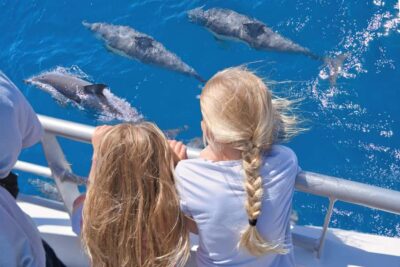
Tikapa Moana Whales, Dolphins and Islands Cruise
Read our review →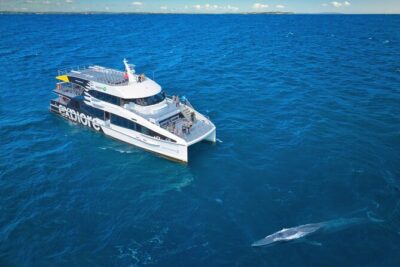
Browse the lists this tour appears in